|
Couples Therapy, or marriage counselling as it is also called, is one of the top reasons why people contact a therapist for help. Even if the person contacting the therapist is asking for individual therapy, our relationships play a major role in our well-being, to the point where I often tell clients that mental health exists in the space between them and their significant others, rather than in their own heads.
Frequently couples are reticent to seek therapy for their relationship, or the partner that makes the call struggles to get their other half to attend with them. People fear it will be an uncomfortable and emotionally charged experience where the therapist will end up siding with one or other person, or telling them they should separate. Consequently, counselling can get postponed to the point where the relationship is on life support, and then the outcome might well be less favourable. So, what does happen in Couples Therapy?
You don’t need to wait until both partners agree about attending therapy together. If you are distressed in your relationship, then seek help, and often your therapist will assist you to bring the other partner into therapy. When you enter into Couples Therapy, it is important to understand that the therapist is not a magician who can fix any relationship. There are three people in the room, and each person has their responsibility to be an active agent in the process of change. The therapist guides you towards new solutions and ways of doing things, but ultimately the couples with the best outcomes are the ones who are receptive to feedback and motivated to do the work. It is also helpful to know that not all couples come to therapy for a happy ending. Sometimes a relationship needs help to end well, especially when there are children involved. It has been said that the average couple that comes to counseling has been in distress for about six years before they make the call, which could explain why it is often one of the areas of therapy where people have the most complaints about outcome. As in all fields of mental and physical health, early detection and treatment is the best medicine. Good marriage is a highly skilled activity, so don’t wait until you reach the point where you can’t stand the sight of each other to seek help. Consider your marriage to be like a car and keep it well serviced! Dr Jules If your relationship is in distress, then counselling might be a good option to help you to move forward. I offer a free 20-minute consultation so we can explore how I might be able to help you
1 Comment
Recently I was talking with someone who is having disturbing dreams, as he wants to understand why he is having them and what he can do to stop them. He also wanted to see if I could help him interpret what the dreams are about. While I am not a specialist in analyzing dreams, it got me thinking about dreams in general. We all have dreams (humans and animals alike), even if we don’t remember them, and they are of such significance to our ability to function well that scientists around the world study the mechanics and purpose of dreaming, and have started exploring how to manipulate our dream states to help with sleep disorders and mental health problems.
So why do we dream? No one has yet been able to provide a clear reason, but we do know that dreams are a way that the mind has of working through difficult experiences and feelings. Dreaming also seems to be an important part of memory processing, uniting past and present information that the brain has absorbed while preparing for the future. In general, paying attention to our dreams can give us insight into what is preoccupying us, and to who we are. Dreams are part of how the brain processes what has been happening to us in our daily lives, and as such the majority of people we dream about are known to us in person or by their role. We also tend to dream about things that are related to us, such as our jobs or hobbies. Sometimes we dream about things immediately after they happen, but at other times there is a time-lag and the consolidation of memories happens with incomplete fragments that appear over time, much as if the brain were piecing together a jigsaw puzzle. There are different kinds of dreams, such as nightmares, which are frightening dreams that can cause us to wake up or be fearful of going to sleep; recurring dreams which contain a repeating pattern; and lucid dreams, where brain activity is unusually high and we are aware that we are dreaming and can manipulate what we are dreaming about. Just a with sleep, dreaming can be disrupted, and can be an indication of physical or mental health problems. Drugs and alcohol can alter our dream pattern for example, while people who are depressed are more likely to have nightmares. In fact, the relationship between dreaming and depression is particularly interesting, as people who are depressed tend to have excessive REM sleep, likely because they are more given to cognitive introspection and are more highly autonomically aroused, and dreams are linked to autonomic arousal. Excessive dreaming can be exhausting for the mind and body, and so some anti-depressant medication reduces dream sleep. This is a good reason why it is important to keep active and not give in to the urge to curl up and sleep when you are depressed. It is not all bad news though, as dreams can be a rich source of creativity, providing inspiration for novel ideas or problem solving. Some people find it helpful to keep a pen and paper next to the bed so they can record their dreams immediately upon waking and take full advantage of the insight they gain from their brain activity while sleeping. Dreams can be disturbing, enlightening, comforting and puzzling, but they are always fascinating insights into who we are, where we have been, and perhaps where we are going. Pay attention to your dreams and see what you learn about yourself. Dr Jules If the subject matter in this article resonates with you, then counselling might be a good option to help you to move forward. I offer a free 20-minute consultation so we can explore how I might be able to help you. 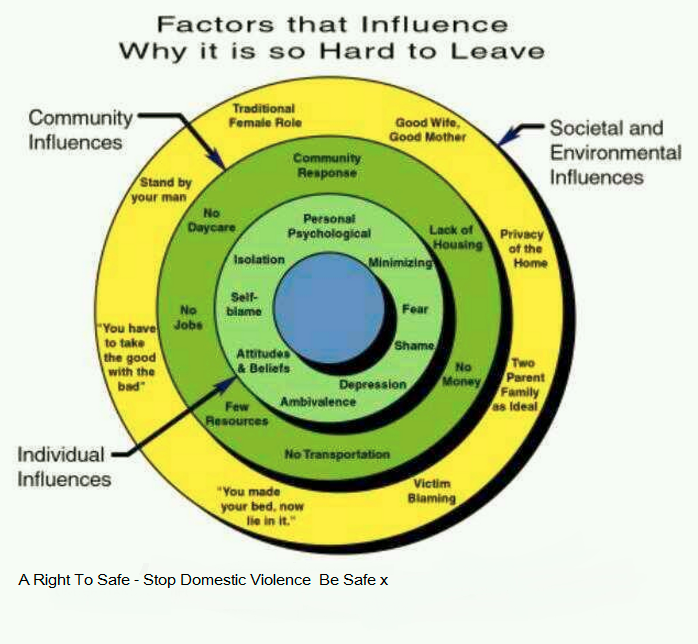 Recently I heard from a lady who is in a difficult relationship. She has been verbally abused by her partner for some time, but lately that abuse has become physical violence. She doesn’t have any family close by and is unsure whether she should stay, or risk leaving without a definite place to go to. In this situation, should a woman stay or go?
On the face of it, the answer is simple, she should get out. However, people who have been in abusive relationships know that it is often not that easy. There are financial and emotional factors that hold you together, and quite often there are children, property, family and social ties that convince you it is worth hanging in there and giving it another chance. It might also feel shameful to admit the truth of what is going on in your relationship, or maybe you believe on some level that you have contributed to the violent behavior you are experiencing. You may also think that your partner still loves you and doesn’t mean to hurt you. And what if there are children that you don’t want to disrupt, or pets that you don’t want to leave behind, or maybe you don’t live anywhere near a domestic shelter and don’t have anyone that might take you in if you can’t afford a place of your own? I have seen women going through these dilemmas time and again. Unfortunately, when you are living overseas the situation can be even more complicated as your family and close friends are in another country, and taking children with you can cause all kinds of legal and custody disputes, which the woman might not be financially equipped to fight. The following illustrates some of the reasons why women stay in violent and abusive relationships: From: https://sites.google.com/site/aright2bsafe/ So, in our case example, should she stay or should she go? Here are some important things to keep in mind:
Here are some websites that might prove helpful if you, or someone you know, is in this situation: https://domesticviolenceuk.org/ http://www.lost-in-france.com/living-in-france/life/190-domestic-violence https://www.womenshealth.gov/violence-against-women/types-of-violence/domestic-intimate-partner-violence.html https://helpguide.org/articles/abuse/domestic-violence-and-abuse.htm Dr Jules If the subject matter in this article resonates with you, then counselling might be a good option to help you to move forward. I offer a free 20-minute consultation so we can explore how I might be able to help you. Working with clients in France, I am increasingly aware of the struggles many people face here. While people who move abroad looking for a better life or a new adventure often do find the happiness they seek, it is important to know that there can be tough days for all of us, and some people find it more challenging than others. I have lived in several different countries (including Japan, America and now France) so I can easily relate to the stories I hear. Phrases I often hear from clients include “I feel like an outsider”, “I feel trapped”, “I feel isolated” or “I feel lost”. According to a survey by Internations (https://www.internations.org/expat-insider/2016/common-expat-problems), there are common problems experienced by people living overseas, and these include worrying about finances, adjusting to a different culture, coping with the language barrier, and dealing with changes in your relationship with your partner. Obviously, we all experience problems in our daily lives such as having a bad day at work or not getting along with our spouse. Talking about your problems doesn’t mean you are being weak or negative, it just means you are dealing with the realities of life. These times are made more bearable though, by having a caring support system around you, and once you become an expat you often find that support system shrinking. So, the point of my post today is to let you know that there is no shame in feeling that you are not coping well with your life in a new country, in fact these kinds of struggles are common. With Brexit looming many people are finding these issues are intensified as they face difficult decisions about staying or going back to the U.K., and all the while a new wave of people in Britain are considering leaving before the Brexit deadline to start that new life in a place in the sun. If you are struggling at all, then reach out to your support system or consider talking to someone such as a professional counsellor. I offer a free 20 minutes where we can chat to decide if I am the right person to help you, and if not, I can direct you to the appropriate resources. Dr Jules If the subject matter in this article resonates with you, then counselling might be a good option to help you to move forward. I offer a free 20-minute consultation so we can explore how I might be able to help you. This article was originally published for my column at English Informer in France When we first get together with a new partner we often want to spend all our time together, perhaps at the expense of other relationships and obligations. This tends to settle down into a routine after we make a commitment to each other, and gradually we work our couple time around work and family life, perhaps to the point where we feel we sometimes feel like ships passing in the night.
As I now work in France, I see plenty of couples who have made the big move to live overseas, and often a driving factor is their desire to start a new shared adventure, and perhaps rediscover some of that quality time together that was lost in the hustle and bustle of daily life in the UK. However, the grass is not always greener on the other side, as leaving behind the old routine with family, work and friends, forces couples to spend more time together than they have been used to, and this can bring its own conflicts. While we may think that spending more time together on building a shared dream will be blissful, it can in fact bring new stress; and it’s okay to admit that maybe it isn’t as great as you were expecting it to be. When you are also dealing with a new culture, new language, lack of social support and challenges in finding work or renovating a house, then that’s an enormous amount of stress for anyone to take on. So how can you protect your relationship in the midst of all these changes?
Dr Jules If the subject matter in this article resonates with you, then counselling might be a good option to help you to move forward. I offer a free 20-minute consultation so we can explore how I might be able to help you. We hear a lot these days about the power of positive thinking, but can changing our thoughts really have much of an effect? Research in neuroscience suggests that it can.
Our brains build new neural pathways by repeatedly firing sets of neurons that wire together. When we start learning something new, such as taking a course or the first few weeks of a new job, we can feel like our brain is full and overloaded, and for a while it really is. As we keep repeating the new information input, or practicing a skill, the brain starts to make these pathways more robust and efficient, rather like an information super-highway. At the same time, the brain is also de-cluttering by getting rid of old pathways that we are not using anymore, or in effect pruning and making space, as the underused pathways literally get marked for removal by a protein that attaches to them. This has important implications because as we become aware of the how the brain works, we can begin to take advantage of this process and actively label which pathways are for growth, and which are for reassignment to the trash. Habits of mind reinforce new skills, behaviours and thinking patterns, so what is important is the combination of repeated practice along with the mindfulness to be aware of what you are focusing your thoughts on. And that is vital, because if you choose to focus your thoughts on ideas of revenge against your boss at work, or all the reasons why your spouse upsets you, or you constantly ruminate on why your life isn’t working out, then guess what? You are wiring yourself up to be more practiced and successful at the very things you need to avoid. The research therefore seems to lend strong support to the idea that keeping your thoughts focused in a positive direction can indeed help to create a consistently more hopeful mood and a greater sense of vitality. To further aid the process, it is important to get a good night’s sleep. During sleep the brain rejuvenates itself and clears the toxins; it also does its important work of growing and pruning, although that procedure is far from understood at this point. Even a quick nap of 20 minutes during the day will give the brain some downtime to focus on these background tasks. When we are sleep-deprived our brain is overloaded and unable to repair itself, which is why the day after a poor night of sleep can feel like wading through treacle. So, if you want an easy and fundamental way of taking care of your mental health, keep building those superhighways of positivity and get plenty of good quality sleep. Your brain will thank you for it! Dr Jules If the subject matter in this article resonates with you, then counselling might be a good option to help you to move forward. I offer a free 20-minute consultation so we can explore how I might be able to help you. Often in my practice, and especially when working with couples, I see anger that is out of control. In relationships, this can quickly spiral into verbal or physical abuse. While anger is a normal emotion, it needs to be expressed in healthy ways and regulated. Traditional anger management techniques have focused on beating a pillow or yelling when you are alone, but we all need help to develop a deeper understanding of this emotion and effective ways of managing it.
Anger is basically just too much stress or distress – from memories, what’s going on around you, or what’s said to you. It is a complex emotion that signals we are feeling threatened, wronged, afraid. It is however, a normal emotion and can have its uses when expressed appropriately and within safe limits. When anger isn’t regulated it can accelerate into criticism, name calling, shouting, throwing things, and at worst, threatening or hurting another person physically. This is when anger turns into abuse and violence, and it is never acceptable. Remember that you can never trust your own judgement when you are angry. Anger is at its core, part of our fight or flight stress response that enabled us to get away or deal with danger and threat. As infants, it also helps us get our needs met, for example if we aren’t getting fed or picked up and cuddled when we want to. The ability to develop self-control, however, is one of the things that separates humans as a species. Our brain has the capacity to process what is going on, regulate strong emotions and then rationalize our response, but anger inhibits that activity. As we mature we learn to subdue our impulses in order to evaluate our options and consider the best course of behavior to get what we want. If you grew up in an angry family, or struggled to get your needs met, then maybe you didn’t learn good impulse control habits, but it is never too late. Anger is a signal, it is telling us that we need to calm down, review what is pushing our buttons and take control of our behavior. When we don’t we can find our work, our relationships and our self-image begin to suffer. Nobody likes to be around someone who is quick to flare up and display their temper on a frequent basis. So, if you find yourself losing control to anger, here are some tips to help:
If the subject matter in this article resonates with you, then counselling might be a good option to help you to move forward. I offer a free 20-minute consultation so we can explore how I might be able to help you. This article was also published on English Informer In France One Small Change in Behaviour That Could Turn Your Relationship Around: Turn Towards and Not Away4/25/2017 In my work with couples, I often see partners come into therapy with complaints about similar issues. They say “we have communication problems”, “we fight all the time”, “we constantly disagree about money / parenting / the in-laws”, “we don’t have sex anymore”. The list of issues is endless, but the core of the problem is always the same. Couples come to therapy because they have lost their connection with each other, they have lost sight of what it was that drew them together in the first place, and now they are floundering and unhappy. Interestingly, it is not attending to the big disagreements that mends the couple relationship, it is repairing the emotional connection and helping couples to care for the relationship on a daily basis. In doing so we need to learn that it is the small repetitive behaviours that make or break our bond with each other, the things we do or don’t do each day that either build up trust and a deepened intimacy, or that tear us apart. Relationship expert John Gottman has spent decades studying couples and what makes a relationship succeed or fail. He has identified the emotional bids that partners make when they are trying to engage with each other. In a six-year study, Gottman found that couples who consistently respond positively to each other’s emotional bids, or turn towards each other, are more likely to stay together. In his study, those couples who turned towards each other’s emotional bids over 80% of the time went on to stay together long term, while those who ended up divorcing only turned toward each other about a third of the time. An emotional bid can be as straightforward as a request for a hug or a comment about our day. Gottman has identified four possible ways that we respond to these bids:
To illustrate this, let’s imagine a scenario where one partner has had a hard day at work. The commute was difficult, there was a series of unproductive meetings that didn’t go well and a serious disagreement with a colleague rounded off the day into a perfect storm. Our unhappy spouse comes home exhausted and wants nothing more than to watch some mindless TV and be left alone. Then their partner comes home, seemingly in a bright mood and starts talking about her day while she unpacks some shopping in the kitchen. In this example, the partner who comes home tired can either make a kind comment to acknowledge their loved one is in a bright mood and had a good day, or go into the kitchen and engage in conversation about her day, or ignore her, or ask her to be quiet as the TV is on. Which would you choose? Interestingly, you don’t always have to be enthusiastic, sometimes it is enough just to acknowledge your partner’s bid for attention and make them feel valued in the process. An emotional bid is the way that we each constantly check in to make sure our partner still cares, and when it is answered with positive attention it serves to reinforce and strengthen the relationship. So, take note of the ways in which your partner makes emotional bids to you, and be sure you turn towards and not away. It could be the key to saving your marriage. Dr Jules If the subject matter in this article resonates with you, then counselling might be a good option to help you to move forward. I offer a free 20-minute consultation so we can explore how I might be able to help you, and this can be face to face, via phone or video link, whichever feels easier for you. This article was also published as one of my regular posts for English Informer in France Coping with Sleeplessness and Insomnia
Many of us suffer with periods of poor sleep, where we spend endless hours staring at the alarm clock as we struggle to get to sleep and stay asleep, or we find ourselves waking up much too early and then feeling exhausted throughout the day as our time in bed failed to leave us feeling refreshed. When this pattern repeats, these periods of poor sleep can build up into a cycle of anxiety about sleep in general, and thus we can get into a vicious cycle. The symptoms I have described can be diagnosed as insomnia when they occur regularly each week for at least a month and cause distress, and they are of concern as they can lead to problems functioning during the day. We all know how short tempered we become when we are tired, and how tough it is to get even the simplest of tasks completed. Some days it can feel like we are wading through treacle when all we really need is some good quality sleep. As a counsellor, I often see that poor sleep is additionally associated with anxiety and depression, and therefore disrupted patterns of sleep can be indicative of other problems in a client’s life. Our dream patterns are also important, as dreams are in effect a form of stress control where the patterns of stress arousal during the day are worked through in the brain and in a sense ‘deactivated’. In normal sleep, we fall into REM or dream sleep about every 90 minutes, with around 2 hours a night spent dreaming; but if a person is depressed they can have excessive dream sleep, which leads to higher stress arousal and exhaustion. Some anti-depressants reduce our amount of dream-sleep, as does a pattern of the brain naturally starting to wake earlier than normal. It is therefore both the amount and the quality of our sleep that we need to pay attention to. If you are finding that your sleep patterns have been changing for the worse lately, and your GP has ruled out a physical cause, then here are some tips to help you recondition your mind and body back into a good sleep pattern:
Dr Jules If the subject matter in this article resonates with you, then counselling might be a good option to help you to move forward. I offer a free 20-minute consultation so we can explore how I might be able to help you. This week I feature a reader question from a young person who moved to France with his mother:
Dear Dr Jules My mum is a single parent and I am 15. I was happy with my life and school in the UK, but Mum wanted to move to France, always. We moved a couple of months ago. I have no friends and she doesn't. I hate the school cos my French is not great and I was getting ready for exams. My life is a mess and she is not happy. Already money is hard for her. I know we can't afford to move back as we have no-one there. But now I am starting to resent her. Hi there Thank you for reaching out to ask for help. You are understandably frustrated with your situation, and possibly feeling somewhat out of control, which is never a comfortable place to be. Moving to a new country is a huge step for anyone, as you leave behind everything that is familiar and encounter a new language and culture. Facing all the challenges of a big move is tough enough for anyone, but particularly when you are 15, and there are some good reasons for that. When we are in the adolescent stage of life we have some vital developmental tasks to accomplish. Primarily this centers around forming strong friendships with our peers who are becoming more important in our life, while at the same time we start to pull away from our family as we need to become more emotionally and psychologically independent from them. And while all of that is going on, we know we should be focusing on school and figuring out who we are and what we want to be in life. It is an incredibly confusing and demanding time and unsurprisingly, therefore, few of us remember our teens as an easy period. In your case, you have some complicating factors added in. You don’t yet have any close friends in France, and your mum is also isolated, so you are both forced to depend on each other more than you might want to. You are also having to navigate a new school system in a language you don’t yet fully understand, and at a time in your education where the pressure is starting to build. No wonder you are feeling resentful, and that your mum is in the firing line for all your pent-up feelings. Whether you both stay in France longer term is something to be decided, but in the meantime, there are some things you can focus on to help you feel more in control:
Dr Jules If the subject matter in this article resonates with you, then counselling might be a good option to help you to move forward. I offer a free 20-minute consultation so we can explore how I might be able to help you. Please contact me for more information. |
